Shipment Rates
In CargoPilot, administrators can define their own pre-carriage fees. Just like consolidation options, shipment rates appear as selectable pre-carriage choices that customers can choose from and eventually book.
Zones
Shipment rates in CargoPilot are based on custom regions you define in Google Maps. To make setup easier, a default shipment rate is available. You can assign custom rates to each zone you create.
How to Create Zones
To create a zone, simply click around an area on the Google Maps component—for example, tracing the border of the Netherlands. This will generate an orange “bubble” representing the new zone. It’s helpful to give your zone a clear name and select the relevant country, such as Netherlands. This makes it easier for CargoPilot to prioritize the correct zone when two areas overlap.
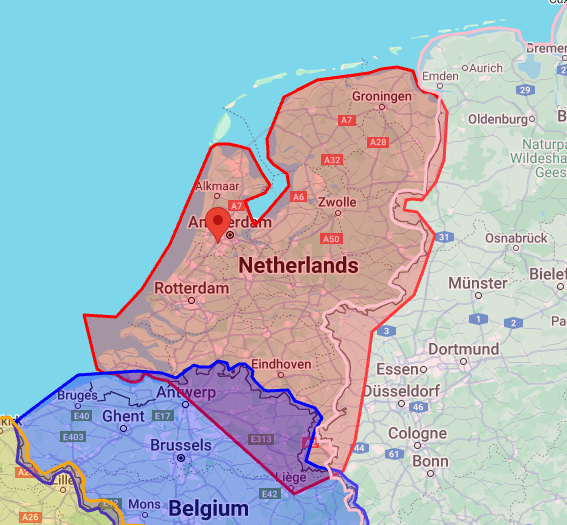
In the image above, multiple zones have already been created. Each country is assigned a different color to easily identify which rate sheet is linked to which zone.
Why Use Zones?
You might be wondering: isn’t creating zones a lot of manual work?
Actually, it gives you a lot of flexibility and control. Zones allow you to handle location-based pricing in a smart way. For example:
The French government increases the toll in Paris from €12 to €18 due to heavy traffic. In CargoPilot, you can simply create a zone around Paris and apply a custom rate to that specific area.
Note: CargoPilot will always use the most expensive matching rate when multiple zones overlap. This ensures that no unexpected undercharges occur.
Shipment rate restrictions
- Max length
- Max width
- Max height
Rates
Each shipment rate zone can be assigned a specific rate structure, allowing for flexible pricing models. The following pricing options are available:
- Minimum rate – The lowest possible charge for the shipment rate.
- Maximum rate – The highest possible charge for the shipment rate.
- Base rate – The standard flat fee applied to the shipment rate.
- Rate per kilogram – A dynamic pricing model that calculates costs based on shipment weight.